
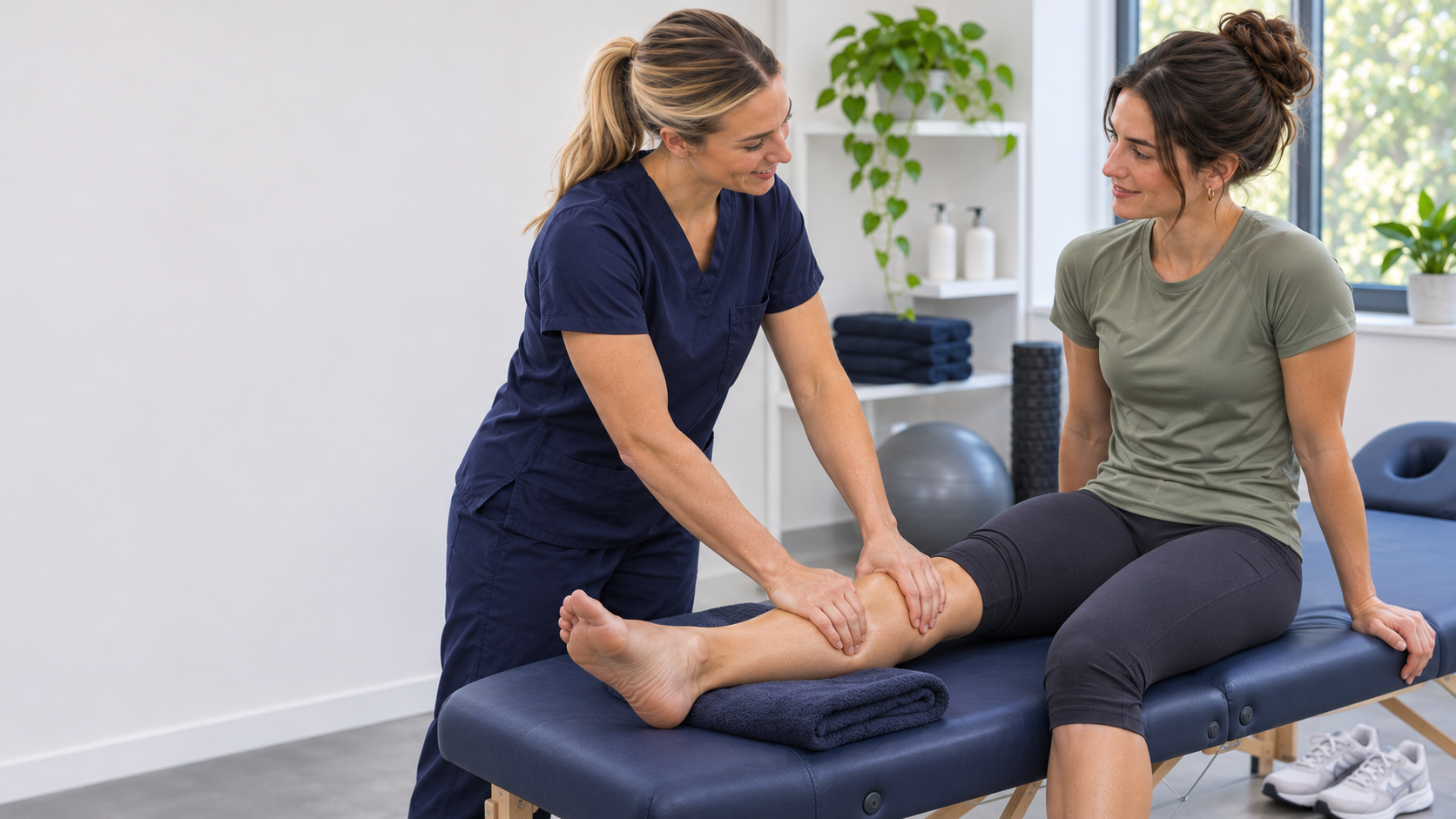
Remedial and sports massage are hands-on soft tissue treatments. We tailor each session to what you’re experiencing, how it affects your daily activities or training, and what you want to get back to doing.
What to expect at your appointment
- Consultation. Your therapist asks about your symptoms, injuries, health history and goals.
- Movement assessment. Where appropriate, your therapist checks range of movement and asks which positions or movements reproduce symptoms.
- Treatment. Your therapist explains the options, seeks your consent and adjusts techniques and pressure as the session progresses.
- Review. You discuss how the area feels or moves after treatment and whether follow-up or assessment by a GP or physiotherapist is appropriate.
Techniques your therapist may use
Deep tissue massage
Your therapist uses gradual, sustained pressure to work on deeper muscle layers where appropriate. Tell your therapist if the pressure feels uncomfortable so they can adjust it.
Myofascial release
Your therapist applies slow, sustained pressure to selected areas of muscle and surrounding connective tissue.
Trigger point therapy
Your therapist applies focused pressure to specific tender areas and checks how you respond throughout.
Sports massage and athletic recovery
Sports massage can be part of your recovery routine after training or competition. Tell your therapist about recent changes in training load, current injuries and upcoming events so they can adjust the timing, technique and intensity of your session.